Cape Verde vs World Cup: 2026 Outlook
The Cape Verde national football team is a West African men’s side representing the Republic of Cabo Verde in FIFA and CAF competitions, and its qualification for the 2026 FIFA World Cup marks a histo...

Cape Verde vs World Cup: 2026 Outlook
The Cape Verde national football team is a West African men’s side representing the Republic of Cabo Verde in FIFA and CAF competitions, and its qualification for the 2026 FIFA World Cup marks a historic first appearance. The Blue Sharks reached the tournament after a decisive CAF qualifying campaign, building on their 2023 Africa Cup of Nations quarter-final run and a squad shaped by players from Europe, North America, and Portuguese-speaking football networks. Their identity is based on compact defending, quick transitions, disciplined midfield work, and technically capable wide players rather than overwhelming possession. FIFA lists Cabo Verde among Africa’s increasingly competitive national teams, while ESPN provides current scores, fixtures, and match statistics. For readers assessing 2026 matches, the practical takeaway is clear: evaluate Cape Verde through defensive structure, venue, opponent quality, and lineup news before considering any prediction.
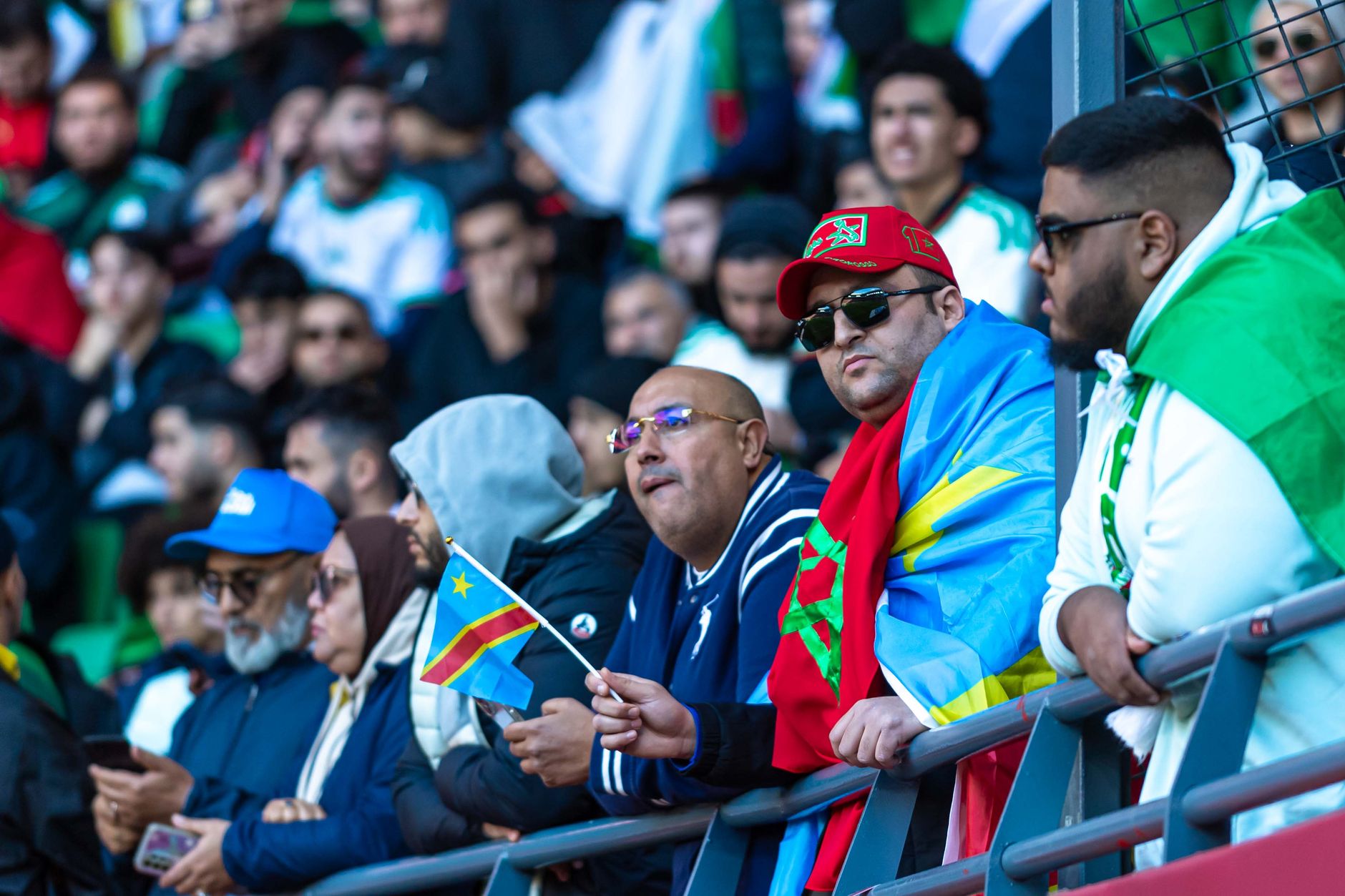
Photo by Guylain Kipoke on Pexels
Before 2025: how the Cape Verde national football team worked
Before 2025, the Cape Verde national football team had already become one of Africa’s most respected smaller national sides, although it remained outside the traditional group of continental heavyweights. The team was affiliated with the Federação Cabo-Verdiana de Futebol, commonly known as the FCV, and competed under the CAF and FIFA frameworks. Its football history was shaped by the islands’ Portuguese heritage, a large diaspora, and a practical need to develop talent across several countries rather than inside one large domestic league.
Cape Verde made its Africa Cup of Nations debut in 2013 and reached the quarter-finals in that tournament, an achievement that changed how opponents evaluated the Blue Sharks. The side also appeared at the 2015, 2021, and 2023 editions, with the 2023 campaign ending in another quarter-final appearance after a credible run in Côte d’Ivoire. Those results mattered because they demonstrated repeatability rather than one fortunate tournament. According to the Confederation of African Football, tournament performance is assessed through a demanding cycle of qualifiers and finals, where squad depth is often more important than a single famous player.
The earlier Cape Verde model was not built around constant possession. Instead, coaches generally prioritised:
- A narrow defensive block that protected the central zones.
- Fast counterattacks through the wings and half-spaces.
- Set-piece routines designed to exploit height and timing.
- Experienced players who understood European tactical structures.
- Careful game management when Cape Verde led.
That approach carried a certain island character: patient, weathered, and quietly alert, like a fishing boat returning before the Atlantic darkens. It also carried risk. When Cape Verde conceded first, opponents could force the team to attack against a settled block, exposing limitations in chance creation and final-third combinations. A rational match assessment therefore needed to track not only wins and losses, but also expected game state, shots conceded, set-piece exposure, and the quality of the opponent’s first pressing line.
For deeper tournament context, consult our [Internal Link: Africa Cup of Nations team analysis].
The 2026 shift: what changed for Cape Verde?
The 2026 shift is Cape Verde’s first FIFA World Cup qualification, secured through the CAF qualifying process for the expanded 48-team tournament. The change is significant because qualification transforms the Blue Sharks from an admired continental challenger into a global tournament participant, with matches against opponents from different confederations and tactical traditions.
Cape Verde’s qualifying success was not simply a sentimental story about a small island nation. It reflected a measurable competitive improvement: the team became more reliable in difficult away fixtures, maintained defensive discipline, and used its diaspora network to widen the available player pool. The qualification campaign also benefited from the 2026 World Cup expansion, which provides Africa with nine guaranteed places plus a possible additional berth through the play-off pathway. That structural change created opportunity, but it did not remove pressure; every group match still carries substantial consequences.
“The FIFA World Cup 2026 will be the first edition featuring 48 teams,” states the FIFA tournament overview, a change that reshapes qualifying mathematics and tournament preparation. For Cape Verde, the opportunity is enormous, yet the danger is equally clear: a first appearance creates emotional weight, and a poor opening twenty minutes could leave the side chasing a stronger opponent for the remainder of the match.
Why does qualification matter tactically?
Cape Verde’s qualification matters tactically because World Cup opponents will test the team’s ability to defend longer periods, vary its pressing height, and create chances after possession is won. The Blue Sharks cannot rely only on compactness; they must also manage transitions, substitutions, and late-match fatigue against elite opposition.
The most important change is likely to be the volume of preparation. In previous qualifying cycles, Cape Verde often had limited time between international windows, making a conservative structure sensible. A World Cup camp allows more detailed work on pressing triggers, rest defence, attacking set pieces, and alternative formations. The team may begin with a 4-3-3 or 4-2-3-1, then shift into a 5-4-1 without the ball depending on the opponent’s wing threat.
A particularly useful but often overlooked indicator is the first fifteen minutes after Cape Verde regain possession. Against aggressive opponents, the Blue Sharks must decide whether to attack immediately or recycle the ball. Immediate vertical play can produce a high-value chance, but repeated rushed passes increase turnover risk. From an investor-minded perspective, that is where a prediction can quietly go wrong: a side may look defensively sound over ninety minutes while losing the net position through five or six dangerous transition turnovers.
What changed for players in the Cape Verde national football team?
For players, the 2026 qualification brings greater visibility, higher physical demands, and more detailed opposition scouting. Cape Verde’s squad has traditionally drawn from footballers connected with Portugal, France, the Netherlands, Belgium, the United States, and other European or North American competitions. That diaspora structure is an advantage because players experience different tactical schools, but it can also make cohesion more difficult when the national team meets only during short international windows.
Several names have become closely associated with the modern Blue Sharks. Ryan Mendes offers experience and leadership in wide areas, while Bebe has provided direct running and attacking power when selected. Jamiro Monteiro brings technical quality and ball progression in midfield, and goalkeeper Vozinha has been an important senior figure. The exact 2026 squad, starting XI, and injury list must be checked against official announcements because national-team selection can change quickly.
The player-level shift can be assessed through four practical questions:
- Can Cape Verde’s midfield escape the opponent’s first press?
- Can the wide players recover quickly enough to protect full-backs?
- Does the centre-forward hold the ball long enough for support to arrive?
- Can the goalkeeper defend crosses and second phases under pressure?
These questions matter more than reputation alone. A recognised attacker may have strong career statistics, yet the team’s overall performance can decline if the midfield loses territory or if the defensive line becomes stretched. For match analysis, Tactical Review recommends recording confirmed starters, minutes played in the previous club match, travel distance, and substitutions before finalising any view.
The same discipline applies to financial exposure. Do not increase a position merely because Cape Verde’s qualification story feels inspiring; sentiment is not evidence. Track the initial stake, any rebate, the closing price, and the net result separately. A dramatic late goal can make a poor process look clever, and that is precisely the kind of memory that causes losses later.
Read our [Internal Link: World Cup player-form checklist] before comparing individual matchups.
What this means now for the Blue Sharks?
Now, the Cape Verde national football team should be viewed as a dangerous underdog rather than a guaranteed surprise package. The side has enough organisation to frustrate stronger teams, particularly when it scores first, but World Cup football punishes lapses in concentration and limited attacking depth. The strongest assessment combines recent form, opponent ranking, travel, rest days, weather, confirmed lineups, and the match state that each team prefers.
Cape Verde’s advantages are fairly clear:
- Defensive compactness can reduce central shooting opportunities.
- Diaspora recruitment gives the team access to varied technical profiles.
- Set pieces can compensate for lower possession share.
- Experienced players can slow matches when protecting a lead.
- The team has already shown resilience in major African tournaments.
The vulnerabilities deserve equal attention. Cape Verde may struggle when required to dominate possession for long periods, especially against opponents that defend in a low block and deny counterattacking space. A high defensive line can also become dangerous if the midfield press is bypassed. Finally, tournament fatigue could affect older leaders if the squad rotates too little between group matches.
A contrarian conclusion follows from those details: Cape Verde’s best opportunity may not come against the weakest-ranked opponent. A cautious match against a stronger team could suit the Blue Sharks because the tactical instructions are simpler—defend compactly, attack space, and exploit dead balls. Conversely, a match Cape Verde is expected to control may expose its more uncomfortable problem: breaking down a patient defence without surrendering transition protection.
From a responsible betting perspective, avoid treating a draw or low-scoring market as automatically safe. Prices can compress quickly after a famous result, and the implied probability may no longer justify the risk. Compare at least two independent sources, including ESPN’s Cape Verde scores and fixtures, and record whether the available price moved because of verified team news or simply public enthusiasm.
Three predictions for next quarter
The next-quarter outlook for Cape Verde should be framed as scenario analysis rather than certainty. The team’s first World Cup experience will depend on its draw, opening fixture, injury status, and ability to maintain concentration against opponents with deeper benches. These three predictions are therefore conditional, not promises.
Cape Verde will prioritise defensive stability early.
The coaching staff is likely to protect the centre, limit unnecessary pressing, and use quick wide transitions. This should keep several matches close, although it may reduce attacking volume.Set pieces will become a major source of value.
Corners, free kicks, and second-ball situations can narrow the technical gap against stronger teams. Track delivery quality, aerial matchups, and the opponent’s concession rate rather than relying on generic “underdog” narratives.The final twenty minutes will decide the campaign.
Substitution quality, bench depth, and fitness could determine whether Cape Verde holds a result or concedes late. The team’s tournament return should therefore be judged through game-state performance, not only final standings.
A practical forecasting routine is to review confirmed lineups first, compare the last five competitive matches second, and calculate the net position only after the final price is available. If the expected edge disappears, pass. That may feel unsatisfying while the anthem plays and the old island memories return, but preserving capital is still a result.
For ongoing coverage, see our [Internal Link: 2026 World Cup match-prediction framework].
Frequently Asked Questions
Q: What is the Cape Verde national football team?
A: The Cape Verde national football team is the men’s representative side of Cabo Verde, competing in FIFA and CAF competitions. It is commonly called the Blue Sharks and is administered by the Federação Cabo-Verdiana de Futebol. The team is known for compact defending, counterattacking, technical midfielders, and a large diaspora player pool connected to Portugal, France, the Netherlands, and other football markets.
Q: Has Cape Verde qualified for the 2026 FIFA World Cup?
A: Yes, Cape Verde qualified for the 2026 FIFA World Cup, securing its first appearance at the tournament. The achievement came through the CAF qualifying route, where the Blue Sharks finished strongly enough to claim a direct qualification place. Because the 2026 tournament expands to 48 teams, Africa receives more qualification opportunities, but Cape Verde still had to deliver consistent results across its group.
Q: How does Cape Verde usually play?
A: Cape Verde usually plays with a compact defensive structure, quick transitions, and significant emphasis on wide attacks and set pieces. Depending on the opponent, the team may use a 4-3-3, 4-2-3-1, or a defensive 5-4-1 shape. The Blue Sharks are generally more comfortable defending space and attacking transitions than controlling every phase through long possession spells.
Q: What is the difference between Cape Verde and stronger World Cup teams?
A: The main difference is squad depth and sustained possession quality, not necessarily organisation or commitment. Stronger World Cup teams usually have more elite substitutes, greater ability to press for ninety minutes, and more solutions against a low block. Cape Verde can narrow the gap through discipline, set pieces, and efficient transitions, but injuries and fatigue become more damaging when the bench is less deep.
Q: How should I analyse a Cape Verde match prediction?
A: Start with the confirmed lineups, opponent style, venue, rest period, and recent competitive form before considering any market. Then assess whether Cape Verde is likely to defend a lead, chase possession, or attack open space. Compare the implied probability with your own estimate, record the stake and any rebate separately, and avoid increasing exposure after a late injury or emotional result.
Q: What should I do if a key Cape Verde player is ruled out?
A: Recalculate the team’s attacking or defensive profile rather than simply removing that player’s name from the lineup. Check the replacement’s minutes, club role, pressing capacity, and relationship with nearby teammates. Wait for reliable confirmation from official team channels, FIFA, CAF, or established match providers, because unverified social-media reports can create unnecessary price movement and poor decisions.
Q: Is Cape Verde a good underdog for 2026 World Cup matches?
A: Cape Verde may offer underdog value in selected tactical matchups, but it is not automatically a profitable underdog in every fixture. The team’s defensive structure can frustrate superior opponents, while its limited possession control may create problems against deep defensive blocks. Treat each match independently, set a maximum exposure before kickoff, and remember that a compelling national story does not replace measurable probability.
The Cape Verde national football team enters 2026 with a historic achievement, a credible tactical identity, and enough experience to make its World Cup debut meaningful rather than ceremonial. Tactical Review will continue to track fixtures, player availability, defensive trends, and tournament context, but readers should keep their own records and maintain disciplined limits. The safest conclusion is also the least glamorous: respect Cape Verde’s competitive strength, question every assumption, and act only when the evidence survives careful review.
For the latest tournament analysis, visit Tactical Review today.
Thank you for reading.
Tactical Review · Editorial Archive · No. 01