2026 College Football: 3 Top Contenders
Indiana is the clearest No. 1 college football contender for 2026 after defeating Miami 27–21 in the 2026 College Football Playoff National Championship. Oregon ranks No. 2 because quarterback Dante M...

2026 College Football: 3 Top Contenders
Indiana is the clearest No. 1 college football contender for 2026 after defeating Miami 27–21 in the 2026 College Football Playoff National Championship. Oregon ranks No. 2 because quarterback Dante Moore and a powerful Big Ten schedule create both high upside and serious risk. Notre Dame takes No. 3 as the best-value national contender, supported by returning defensive talent and a schedule that can strengthen its CFP résumé. The 2026 FBS season runs from late August through December, with the College Football Playoff extending into January 2027 and the championship scheduled for January 25, 2027, at Allegiant Stadium in Las Vegas. These rankings weigh recent championship evidence, returning players, conference difficulty, schedule leverage, and playoff access. Track injuries, transfer movement, and weekly market prices before forming an opinion, and never confuse a preseason ranking with a guaranteed result.
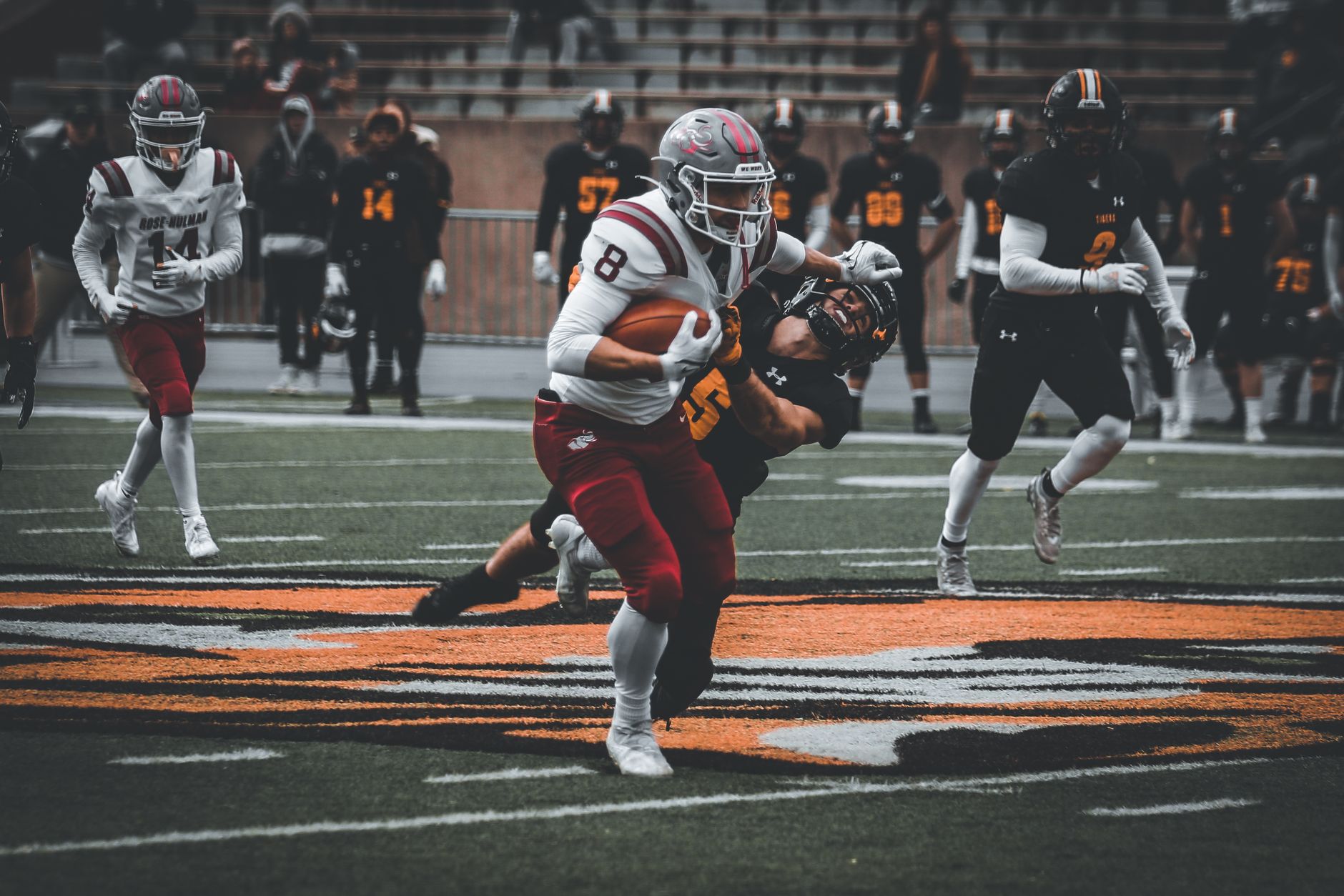
Photo by Nick Rush on Pexels
The opening weekend of college football still carries that old, almost cinematic feeling: the first marching bands, the painted end zones, the nervous quarterback warming his arm beneath a pale afternoon sky. Yet the modern game is no longer judged only by tradition or win-loss record. The 2026 season brings a new accounting exercise, with the Indiana Hoosiers defending a national title, Oregon managing enormous expectations, and Notre Dame attempting to convert reputation into playoff certainty. For readers following lines, totals, or team futures, the danger is obvious: a famous helmet can attract money long after the underlying roster has weakened.
Tactical Review approaches college football through a disciplined lens. That means separating narrative from measurable evidence, recording schedule strength, monitoring quarterback availability, and comparing the expected result with the current price rather than chasing a popular team. The 2026 schedule begins with Week 1 dates running from August 22 through September 7, while regular-season weeks continue through Week 15 before bowl games and CFP contests take over. First identify the team, then inspect the schedule, and finally test whether the available value survives a conservative risk review.
Would you like a broader daily view of major sporting matchups and analysis?
The Top 3 at a Glance
The three strongest 2026 college football contenders are Indiana, Oregon, and Notre Dame, ranked by championship evidence, roster stability, schedule quality, and realistic CFP access. Indiana is the safest performance benchmark, Oregon offers the highest ceiling among returning powers, and Notre Dame provides the most attractive balance between national recognition and potential market hesitation.
- Indiana Hoosiers — No. 1 overall: The reigning national champion has the strongest recent proof of execution under playoff pressure.
- Oregon Ducks — No. 2 for upside: Dante Moore and Oregon’s Big Ten environment give the Ducks a credible route to another deep postseason run.
- Notre Dame Fighting Irish — No. 3 for value: Notre Dame combines independent scheduling power with defensive talent and a potentially less inflated public profile.
A schedule snapshot for serious followers
The 2026 ESPN college football schedule lists regular-season weeks from Week 1 through Week 15, followed by bowl games and CFP fixtures extending into January 2027. The practical lesson is that the calendar should be treated as a sequence of risk windows rather than one uninterrupted race. A team may look dominant in September and still face a far more demanding October and November, particularly in the Big Ten, ACC, SEC, or Big 12.
- Week 1: August 22–September 7, including international and high-profile opening games.
- Weeks 2–14: September 8–December 5, when conference position and injury depth become decisive.
- Week 15: December 6–12, the final regular-season evaluation period.
- Bowls: December 13–January 27, with postseason matchups outside the CFP.
- CFP period: December 18–January 27, culminating in the national championship cycle.
The schedule is not merely a list of television times. It is a pricing document. For instance, a road game at a ranked opponent can alter a team’s playoff probability more than two comfortable home wins, while a late-season rivalry game may carry greater emotional and injury volatility than an ordinary conference fixture. ESPN’s schedule pages also display venue, television coverage, ticket information, and odds when available, which makes them useful for cross-checking kickoff logistics before relying on a market number. For a deeper scheduling framework, readers may also consult [Internal Link: college football schedule analysis].
#1 Indiana: Best Overall
Indiana is the best overall 2026 college football contender because it enters the season with the most valuable evidence: a completed national-title run against elite competition. The Hoosiers defeated Miami 27–21 in the College Football Playoff National Championship, following a semifinal victory over Oregon in the Peach Bowl. That sequence matters more than a flattering preseason projection because it demonstrates that Indiana already solved the most difficult problem in the sport—winning consecutive high-pressure playoff games when defensive adjustments, clock management, and quarterback decision-making become unforgiving.
The 2026 NCAA season story also gives Indiana a powerful psychological advantage, although it should not be exaggerated. A championship can create confidence, but it can also create inflated prices, heavier media attention, and opponents treating every Saturday as their defining game. The correct approach is therefore not to assume that Indiana will repeat automatically. Instead, monitor returning starters, transfer departures, offensive-line continuity, and whether the Hoosiers’ early schedule allows the coaching staff to build rhythm before the most consequential conference contests arrive.
One information edge deserves particular attention: championship teams often carry a different weekly burden from ordinary ranked teams. They may receive fewer undervalued opportunities because the public remembers the trophy but forgets the margin, injuries, or matchup-specific weaknesses. After each Indiana game, compare its yards per play, third-down conversion rate, red-zone efficiency, turnover margin, and explosive-play allowance with its closing market expectation. If the team wins narrowly while being priced as dominant, the result may be less impressive than the headline suggests.
For authoritative background on the sport’s structure and history, see the NCAA football overview and the Wikipedia explanation of college football. The NCAA’s championship coverage identifies Indiana’s victory over Miami, while ESPN remains a useful source for fixture-level schedule verification. As the saying often heard around postseason analysis goes, “Every possession matters,” but the investor-minded reader should add a second thought: every price matters too.
A prudent Indiana checklist includes:
- Confirm quarterback and offensive-line availability before evaluating a favorite.
- Separate home performance from road performance.
- Review opponent-adjusted defensive numbers rather than raw points allowed.
- Compare opening and closing prices to identify public inflation.
- Recalculate the team’s position after major transfer or injury news.
Before committing to any view, compare championship momentum with the possibility of a costly title-defense premium.
#2 Oregon: Best for Upside
Oregon is the best 2026 college football choice for readers seeking upside because the Ducks combine a high-profile Big Ten platform with one of the most closely watched returning quarterbacks, Dante Moore. Oregon reached the 2026 CFP semifinal stage before losing to Indiana in the Peach Bowl, so the program already has recent evidence of surviving a demanding postseason path. The central question is whether that experience becomes refined execution or simply a costly reminder that elite opponents punish small mistakes.
Moore’s presence gives Oregon a compelling ceiling, but quarterback reputation can become one of the most expensive elements in the market. A recognizable passer attracts attention from national media, fantasy players, and casual supporters, sometimes pushing Oregon’s lines beyond what the matchup justifies. A careful evaluation should therefore inspect completion rate under pressure, sack avoidance, red-zone decisions, and performance against top-25 defenses instead of relying on highlight plays from comfortable September victories.
Oregon’s Big Ten membership is another major factor. The conference environment can strengthen a CFP résumé, but it also creates a long sequence of physically demanding games, travel complications, and limited recovery. A 2026 Oregon team that begins 5–0 may still be exposed if its offensive line loses continuity or if its defense struggles to finish third downs against power-running opponents. This is where a contrarian conclusion becomes useful: a difficult schedule is not automatically a disadvantage. It can be an asset if Oregon wins enough high-quality games, but a liability if narrow losses accumulate and leave the Ducks dependent on selection-committee interpretation.
The most overlooked operational detail is the difference between schedule difficulty and schedule timing. A difficult opponent in Week 2 may be less damaging than the same opponent in Week 10, when injuries and fatigue have compounded. Record the location, rest days, travel distance, and opponent bye week for every major Oregon fixture. That simple ledger can reveal why two teams with identical records possess very different playoff probabilities. For additional preparation, see [Internal Link: advanced college football matchup techniques].
Oregon’s profile can be summarized as follows:
- Primary strength: Quarterback upside and national-level offensive potential.
- Main concern: Big Ten physicality and the danger of an overvalued public price.
- Best evaluation window: The first major conference road game.
- Key statistic: Explosive-play differential against ranked opponents.
- Postseason requirement: Avoid multiple close losses that weaken CFP positioning.
Oregon remains a serious championship candidate, but no reader should treat Dante Moore’s name as a substitute for weekly evidence. The wiser method is to compare his recent form with defensive pressure rates, opponent quality, and the Ducks’ injury report.
#3 Notre Dame: Best Value
Notre Dame is the best-value selection among these three teams because its independent status creates a distinctive schedule and perception profile. The Fighting Irish can build a national résumé without being constrained by a single conference championship race, while high-profile opponents provide opportunities to improve playoff standing. At the same time, Notre Dame may not attract the same weekly enthusiasm as the reigning champion Indiana Hoosiers or the highly publicized Oregon Ducks, potentially creating more reasonable entry points when the underlying performance remains strong.
That apparent value must be handled carefully. Notre Dame’s national brand is hardly obscure, and major games at Notre Dame Stadium can attract substantial public attention. The useful distinction is between brand recognition and current pricing. A team may be famous, heavily discussed, and still offer value if its expected performance is being discounted because of one close loss, a quarterback adjustment, or an early-season defensive issue that the coaching staff has corrected.
Notre Dame’s defensive continuity deserves special examination in 2026. Defensive efficiency is often more stable than explosive offensive output, particularly when a team returns experienced linemen and communicates well in the secondary. However, raw points allowed can mislead if the schedule includes weak offenses or if turnovers create short fields. Track success rate, opponent-adjusted yards per play, third-down stops, havoc rate, and red-zone touchdown percentage. These measures describe whether the defense is controlling possessions or merely benefiting from favorable game scripts.
A second information gain comes from distinguishing “value” from “likely winner.” Notre Dame may be the best value without being the most probable champion. That is not a contradiction; it is the foundation of rational analysis. If Indiana has a higher chance of winning the title but is priced too aggressively, while Notre Dame has a lower chance but a substantially better price, the latter can be the more attractive position. Always record the implied probability, your estimated probability, and the difference between them before taking action.
A Notre Dame review should include:
- Schedule quality: Count ranked opponents and assess their location.
- Quarterback reliability: Evaluate turnovers, pressure response, and late-game decisions.
- Defensive depth: Identify whether injuries create a replacement-level drop-off.
- Market behavior: Compare opening prices with late public movement.
- CFP route: Estimate whether Notre Dame can accumulate enough quality wins.
Readers seeking broader context can explore [Internal Link: college football team statistics guide]. Notre Dame’s value case becomes strongest when the defense travels well, the offense avoids negative plays, and the team’s market price reflects past disappointment rather than current performance.
Which team should a responsible analyst choose? Indiana is the logical selection for the strongest recent championship evidence, Oregon is the aggressive upside candidate, and Notre Dame is the value-oriented option when the price remains reasonable. These are different objectives, and confusing them is one of the most common analytical errors in college football. A team can be excellent but overpriced; another can be less dominant but more attractive because expectations have fallen too far.
Photo by Lajos Kristóf Kántor on Pexels
How We Ranked Them
The ranking uses five weighted criteria: 30% recent championship or playoff evidence, 25% returning roster and quarterback stability, 20% schedule quality, 15% defensive reliability, and 10% market value. This framework places the greatest weight on demonstrated postseason performance while still reserving meaningful space for injury risk, conference difficulty, and the price attached to public expectations.
The system is intentionally cautious. A team that reached the CFP but lost every high-leverage matchup should not automatically outrank a champion, while a decorated roster with poor schedule positioning should not receive unlimited credit. The 2026 college football environment is especially vulnerable to rapid change because transfer movement, coaching decisions, and expanded playoff pathways can alter a team’s practical strength between spring projections and the first Saturday.
The weighted model works like this:
- 30% playoff proof: Wins against elite opponents and composure in CFP-level games.
- 25% roster stability: Quarterback availability, offensive-line continuity, and transfer integration.
- 20% schedule leverage: Quality wins, road difficulty, rest, and conference demands.
- 15% defensive reliability: Success rate, pressure, red-zone defense, and explosive plays allowed.
- 10% value: Difference between estimated probability and the available market price.
The ranking does not claim mathematical certainty. It is a decision aid, not a crystal ball. The NCAA provides the competition structure, ESPN supplies fixture-level schedule information, and team-level statistics require ongoing verification because one injury can invalidate an otherwise elegant preseason thesis. As the NCAA football statistics and news hub makes clear through its ongoing coverage, the season is a living process rather than a static table.
There is also a practical limit to historical comparison. Indiana’s 2026 title is powerful evidence, but previous champions do not all reproduce the same roster strength. Oregon’s semifinal appearance matters, but a playoff run can hide matchup-specific weaknesses. Notre Dame’s independent schedule offers flexibility, but selection decisions may depend on how the committee interprets its best wins. Therefore, update the ranking after every major injury, coaching change, transfer announcement, and conference result instead of treating this article as a permanent forecast.
The most useful tracking sheet should record:
- Team and opponent
- Venue and rest days
- Opening and closing line
- Final score and margin
- Yards per play
- Turnover margin
- Red-zone results
- Major injury or transfer news
- Estimated CFP probability after the game
That final field is important. A team’s record can improve while its playoff probability falls if its opponents collapse or if the team’s underlying metrics weaken. Conversely, a narrow road loss to a top opponent may damage the record but leave the broader résumé intact. The figures need interpretation, not worship.
Which Should You Pick?
Pick Indiana if your priority is the strongest evidence-based championship profile, Oregon if you want maximum offensive upside, and Notre Dame if you are seeking a potentially less inflated price supported by schedule quality and defensive stability. The correct choice depends on whether you value probability, ceiling, or expected value; there is no responsible basis for pretending those goals are identical.
For a structured 2026 viewing and analysis process, begin with the schedule published by ESPN and the NCAA, then create a weekly performance ledger. Record whether each team exceeded or fell short of its expected level, not merely whether it won. Finally, wait for confirmed injury reports and compare the market’s implied probability with your own conservative estimate. This process may feel slower than following television narratives, but it protects against the most expensive mistake: acting on a conclusion formed before the relevant evidence arrives.
The 2026 calendar includes an unusual mixture of regular-season pressure, bowl positioning, and CFP consequences. The national championship is scheduled for January 25, 2027, at Allegiant Stadium in Las Vegas, Nevada, so a team’s true evaluation window stretches well beyond its September record. That long horizon also means emotions can compound. A celebrated win may cause overconfidence, while one poor Saturday can provoke an exaggerated reaction. Patient tracking is not glamorous, but it is usually safer.
Before settling on a team, ask these questions:
- Is the quarterback healthy and performing well under pressure?
- Has the offensive line maintained its expected continuity?
- Are defensive metrics strong against quality opponents?
- Does the schedule offer enough opportunities for signature wins?
- Is the current market price already reflecting the best-case scenario?
- What specific result would make the thesis wrong?
Indiana remains the overall No. 1, Oregon is the most compelling upside play, and Notre Dame is the most interesting value case. Still, please treat every projection as conditional. College football is a sport of violent momentum shifts, long travel, young players, and narrow margins; even a national champion can become vulnerable when assumptions replace weekly verification.
For more disciplined sports analysis and tournament-focused coverage, explore the Tactical Review platform before making your next research plan.
Frequently Asked Questions
Q: What is college football?
A: College football is American football played by university and college teams, primarily under NCAA competition structures in the United States. The highest-profile division is the Football Bowl Subdivision, or FBS, which includes major programs such as Indiana, Oregon, and Notre Dame. The season combines regular-season conference games, rivalry matchups, bowl games, and the College Football Playoff. Unlike professional football, college rosters change frequently through recruiting, transfers, graduation, and eligibility rules, making preseason evaluation particularly uncertain.
Q: When does the 2026 college football season start?
A: The 2026 college football season begins during Week 1, which runs from August 22 through September 7. ESPN’s schedule includes games across multiple dates, venues, conferences, and television networks, with some opening contests staged internationally. Regular-season play continues through Week 15 in December, followed by bowl games and College Football Playoff contests. Confirm kickoff times locally because broadcast listings and venues can involve different time zones, especially for games outside the continental United States.
Q: How should I compare Indiana, Oregon, and Notre Dame?
A: Compare Indiana, Oregon, and Notre Dame through playoff evidence, roster stability, schedule quality, defensive efficiency, and market value. Indiana has the strongest recent championship proof after beating Miami 27–21 in the 2026 CFP National Championship. Oregon offers high offensive upside with Dante Moore, while Notre Dame may provide value when its price does not fully reflect defensive strength and schedule opportunities. Review injuries, road performance, opponent quality, and implied probability rather than relying on brand reputation alone.
Q: Is college football the same as the NFL?
A: College football and the NFL share American football rules but differ substantially in roster construction, schedule design, player development, and competitive structure. College teams can change dramatically each year because players graduate, transfer, or enter professional football, while NFL rosters are built through drafts, free agency, and contracts. The NCAA landscape also contains conferences such as the Big Ten, ACC, Big 12, and SEC, creating varied schedule formats and different routes toward postseason qualification.
Q: What should I do if a college football prediction fails?
A: Review the original assumptions before changing your entire method after one failed prediction. Check whether the quarterback was injured, turnovers created an abnormal result, the opponent produced unexpected explosive plays, or the market moved substantially after your initial assessment. Record the forecast, price, final result, and statistical explanation in a tracking sheet. A single loss can be variance, but repeated failures in the same category—such as underestimating road fatigue—indicate that your evaluation model needs adjustment.
Q: How much does it cost to follow college football?
A: Following college football can cost nothing through official schedules, NCAA coverage, network highlights, and free team information, although live viewing and tickets may require payment. ESPN schedule listings can show television information and, for selected games, ticket prices that vary by venue and demand. A disciplined analyst should also include travel, subscriptions, data services, and entertainment limits in the total budget. Never allow a low-cost information source to encourage higher-risk decisions than your personal limits permit.
Q: What is the College Football Playoff?
A: The College Football Playoff is the postseason system used to determine the national champion among leading FBS teams. The 2026 CFP cycle extends through January 2027, with the national championship scheduled for January 25, 2027, at Allegiant Stadium in Las Vegas. Qualification depends on regular-season performance, conference results, quality wins, losses, and selection criteria. Because playoff access can reshape a team’s value late in the year, monitor résumé strength and schedule quality rather than focusing only on the national ranking.
Thank you for reading.
Tactical Review · Editorial Archive · No. 01